Most Popular Global Sports

Sports enthusiasts come together to celebrate the spirit of athleticism and competition in the fast-paced world of sports. Sports provide a universal language that cuts across boundaries and cultures, from the exhilaration of quick kicks in soccer to the accurate swings in golf. This article* offers a comprehensive perspective by combining information on the world’s most popular sports with the fan-favorite sports that captivate millions of people.


1) Soccer / Association Football:

Association football, also known as soccer, has 3.5 billion fans worldwide, playing in regions like the Americas, Asia, Africa, and Europe. With over 265 million players and 5 million referees, it’s a global phenomenon with immense appeal beyond professional ranks.


2) Cricket:

Cricket, a popular sport in Asia, Australia, and the UK, has a fan base of 2.5 billion in India, Pakistan, Australia, and other countries. With 125 recognized countries, it’s a blend of excitement and tradition.


3) Field Hockey:

Field hockey, a fast-paced sport with an estimated 2 billion fans, is popular in Europe, Africa, Asia, and Australia. Its fast-paced action and technical skill, as well as its prominence in the Olympic Games, further enhance its global influence.

4) Tennis:

Tennis, the most popular individual sport globally, has an estimated fan base of one billion individuals, primarily in Europe, Asia, and the Americas, and attracts large crowds with its thrilling matches and top athletes.


5) Volleyball:

Volleyball, an American sport with a fan base of 900 million, is popular in the Americas, Europe, Australia, and Asia, with over 220 national federations registered with the Fédération Internationale de Volleyball (FIVB).


6) Table Tennis:

Table tennis, a popular indoor activity with 850 million fans worldwide, is gaining popularity in Europe, Africa, Asia, and the Americas due to its fast-paced and skillful character, appealing to people of different ages and backgrounds.

7) Baseball:

Baseball, a popular American sport, is gaining popularity in Japan, with an estimated 500 million fans, showcasing its unique blend of talent, strategy, and history.


8) Golf:

Golf, a beloved hobby with 450 million fans, is popular across Europe, Asia, America, and Canada. Its peaceful and competitive elements attract recreational and professional golfers, with 60 million participating annually.


9) Basketball:

Basketball, a popular sport in America, has 400 million fans and 450 million players worldwide, with iconic players like Michael Jordan and Kobe Bryant contributing to its widespread appeal.


10) American Football:

American football, a legendary sport with an estimated 400 million fans worldwide, is gaining popularity in various regions including America, Australia, Asia, Africa, and Europe. Despite its global popularity, it’s important to note that rankings and participation rates are subject to disagreement.


The Invention of Soccer: Who, Where and When

While it may be difficult to envision a world without football, formalized football as we know it is a relatively new sport in overall terms. Although our perception of the beautiful game has gradually changed due to regulation changes throughout time, soccer as we know it today originated in English public schools and universities in the 19th century.
But football has existed as a sport for a lot longer than that. Humans have always had a strong desire to kick a ball around; soccer and other comparable games were once practiced by a number of ancient civilizations. 

We’ll walk you through some of those early iterations of the sport in this post and discuss how they relate to how we currently perceive it.

Those conversations will serve as background for the crucial query: who invented soccer? We’ll walk you through the history of the beautiful game, including its hows, whens, and wheres, before taking a quick look at the first international football competitions. But let’s begin with the fundamentals.


Who Invented Soccer?

The desire to kick a ball has been expressed by humans for a longer time than historians can trace. Whether it’s cavemen kicking a rock to each other, medieval villages battling for possession of a pig’s bladder, or citizens of Elizabethan England running around a muddy bog (football was mentioned in two William Shakespeare plays, King Lear and A Comedy of Errors), football has been around for centuries.

But it was in England’s public schools in the mid-late 1800s that traditional games—like the ones listed above—became modern soccer, and that’s when the Laws of the Game were first codified. The first English Football Association established a set of rules that football players at elite educational institutions nationwide could adhere to. Prior to the establishment of these laws, different cities, regions, and clubs across the nation played using a wide array of different rules and regulations. This set of rules was partly established as a way of confining the sport to these institutions and excluding outsiders.

It is impossible to pinpoint one person as the true creator of association football, but Ebenezer Morley, a Hull-born solicitor who lived in southwest London and is widely regarded as the “father” of the English Football Association, keeps coming up as the most likely candidate. The FA’s inaugural meeting, which resulted in the historic establishment of the Laws of the Game, was prompted by a letter written by the founder of Barnes Football Club to the publication Bell’s Life.


Where Was Soccer Invented?

Since the original Football Association Laws continue to serve as the foundation of football worldwide, association football is widely credited to the English. But the English game back then looked very different; it was essentially a dribbling game, when players from the same team took turns attempting to wiggle their way past opposing defenders and into scoring positions, disregarding their teammates in the process.
Because they were smaller than their English opponents at the time, the Scottish had to come up with new strategies to defeat their more physically aggressive opponents. As a result, they started to develop a new style of play that eventually led to football being what it is today: a passing game.


The sport was revolutionized by a surge of Scots who moved south of the border in search of professional playing possibilities with Northern English clubs, emphasizing team moves and passing play much more than before. Due to this phenomenon, many individuals have claimed over the years that Scotland is the country that truly founded football. Although the sport wasn’t formalized there, it is indisputable that the Scots are largely responsible for the development of modern soccer.

When Was Soccer Invented?

The legendary FA’s founding meeting was held in the Freemasons’ Tavern on Great Queen Street in London on October 26, 1863. Twelve separate clubs’ representatives contributed to the codification of football during the meeting, which marked the beginning of over 150 years of official association football in the United Kingdom.
While the men’s game is typically highlighted in history of the sport, women have been playing football in England and Scotland for practically as long as men have.

The first women’s football match was officially organized in Edinburgh in 1881. Women’s football gained enormous popularity throughout the United Kingdom during and after World War I, with well-known teams like Dick and Kerr Ladies drawing crowds of up to 50,000 spectators in the years that followed.
Even though it’s widely accepted that football was “invented” in 1863, similar games have been played for millennia around the globe. 

WHO IS THE REAL GOAT IN SOCCER?


Ranking the best football players of all time is a subjective task, as comparing a 21st-century athlete to an early 20th-century player is difficult. As the modern game evolves, it’s crucial to identify the benchmark players who set the standard. 2024’s landscape features Erling Haaland, Kylian Mbappe, Kevin De Bruyne, and Harry Kane, but who are they chasing at the top?

  1. Lionel Messi

Lionel Messi is a legendary footballer who has scored 816 goals and 357 assists in 1,034 games for both clubs and countries. His exceptional touch, measured passing ability, and ability to turn the world’s greatest defenders inside out have made him a true legend. Messi has shown great selflessness in cutting back the ball with precision or sliding, dinking, or flicking it over the keeper. He gives himself multiple-choice questions about how he would like to score in every great chance he creates, making him the undisputed Greatest of All Time.

       2.Diego Maradona

Maradona, an iconic Argentine forward, is revered by fans worldwide. With a low center of gravity and technical ability, he was a formidable opponent. His intensity and direct running made him a formidable force. Despite only winning one league title in Argentina, Maradona’s trophies are remembered. His legendary dribbling skills, vision, and desire to win transformed Napoli and Argentinian football, leading them to victory. His legacy continues to inspire fans and fans worldwide.

  1. Cristiano Ronaldo

Cristiano Ronaldo’s career is a testament to his unrivalled talent and never-say-die attitude. He has won multiple domestic titles, including the Premier League, La Liga, and Serie A, and has won five Champions League titles. His never-say-die mentality and never-say-die attitude have made him the greatest European footballer of all time. Despite his inability to age gracefully, his career is a testament to his unrivalled talent and ability to produce clutch moments of brilliance.

  1. Pele

Brazilian football is centered around the spirit of Pele, the greatest ever player on the international stage. Pele scored 77 goals for Brazil in 92 games and won three World Cups. His legacy is complex, with some criticizing his claimed 1,281 goals in 1,363 games, but his record excluding exhibition games remains immense. Pele’s devastating pace and accurate finishing were too much for some of the world’s greatest defenses at the time.

  1. Zinedine Zidane

Cristiano Ronaldo is considered the ultimate complete striker, but Zidane is considered the ultimate complete midfielder due to his technical ability, elegance, and grace. His touch, control over the ball, and intelligence on the ball added to his attacks. Although his trophy cabinet is not as extensive as expected, Zidane’s fear and determination to strike fear into opponents is a hallmark of greatness. His dribbling and clinical decisions have left a lasting impact.

  1. Johan Cruyff

Johan Cruyff, a revolutionary figure, played a significant role in the development of ‘tiki-taka football’ nearly 40 years before Pep Guardiola’s Barcelona and the Spanish national team’s dominance between 2008-2014. He led the concept of ‘Total Football’ with Ajax, scoring 257 goals in 329 games. Cruyff believed in winning matches in the ‘right’ way, and his visionary footballing style has influenced modern football.

  1. Franz Beckenbauer

Beckenbauer, a versatile German defender, excelled in various positions, starting as a midfielder before transitioning to the heart of Bayern Munich’s defense. His exceptional comfort on the ball led to him becoming a box-to-box midfielder. Beckenbauer scored 98 goals in 754 games, including 75 for Bayern Munich, making him a highly sought-after player in the 2010s.

  1. Alfredo Di Stefano

Real Madrid’s greatest player, Di Stefano, is a striker born in Argentina and played for the club six times before moving to Colombia. He played 31 caps and 23 goals in Spain, with 308 goals in 396 games. Di Stefano was a complete striker with immense strength, pace, endurance, and technical ability.

  1. Ronaldo

Ronaldo, a legendary footballer, is often overlooked in comparison to his supernatural teammate Iniesta. Ronaldo is considered one of the all-time top centre-forwards in history, with a world-beating, complete No.9. He was the face of a generation, the ultimate all-rounder, and possessed pace, power, technical ability, and a predatory instinct. His performance is considered one of the most intense in football.

  1. Andres Iniesta

Iniesta’s impact on world football is undeniable, as he was not born at the right time to dominate. His touch, ingenuity, creativity, and vision were unparalleled, making him the second-best Barcelona player of all time. His influence on every team he played in should never be defended, as football isn’t played on a spreadsheet. Iniesta’s contributions to Barcelona and his country’s success are undeniable.

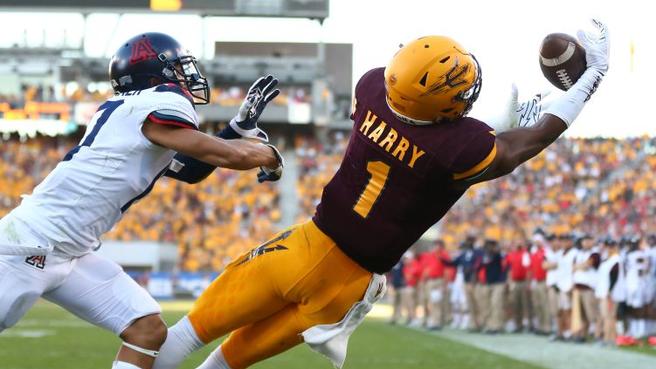
N’Keal Harry The 2019 Rookie Sensation

N’Keal Harry The 2019 Rookie Sensation

The New England Patriots broke with tradition during the 2019 NFL draft: for the first time since Bill Belichick took over as head coach and de facto general manager, the club selected a wide receiver in the first round of the draft.

The former GM also called Harry a “freak who can get vertical, can high-point the ball, has very good body control” — all features that Moss also brought to the table, albeit at a historically high level: between 2007 and 2010, he appeared in a combined 56 regular season and playoff games for New England and registered 271 catches for 4,046 yards and 51 touchdowns.

“I love N’Keal Harry — he was my number one receiver,” a current NFL general manager told Sando.
Whether or not Harry will live up to the lofty comparisons and compliments thrown his way remains to be seen, but one thing is certain: based on his skill set, he should fit in very well in New England as a prototypical X-receiver type.

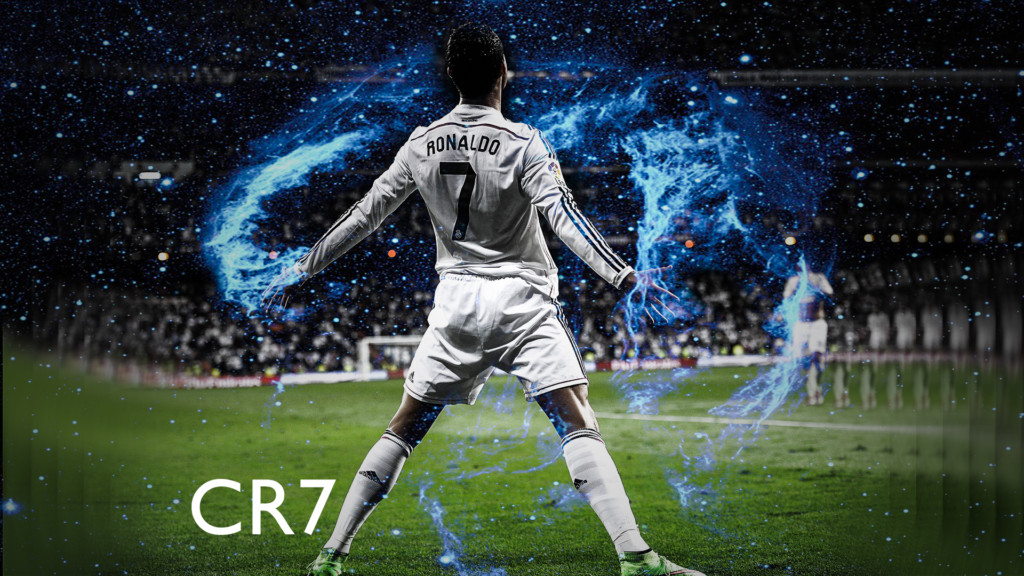
Cristiano Ronaldo dedicates 400th goal to Portugal legend Eusebio

Cristiano Ronaldo dedicates 400th goal to Portugal legend Eusebio

Cristiano Ronaldo racked up his 400th career goal with a brace in Monday night’s 3-0 win over Celta Vigo and afterwards dedicated his performance to Portuguese great Eusebio, who died on Sunday.He also notched 41 goals in 64 appearances for Portugal, part of a total of 733 goals for club and country across his glittering career.

Ronaldo is one of just two players to have scored more international goals for Portugal – Pauleta is the other – and could one day threaten Eusebio’s overall tally after passing 400 career goals with his brace on Monday.

Ronaldo has now scored 20 goals in La Liga this season, taking his total for Madrid in all competitions to 230.He also hit 118 goals during his time at Manchester United and five at first club Sporting Lisbon, while 47 of his goals have come in the colours of his national team.

“Pogba is a Manchester United player, he’s a very good one but he plays for Manchester United.